

 Y Ahora Sonsoles (Atresmedia Television)
Note: This story contains references to sexual assault and suicide.
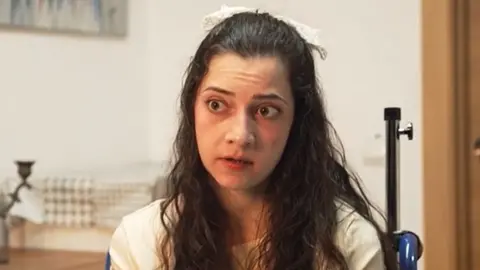
The death by euthanasia of a twenty-five-year-old Spanish female following a protracted court fight with her father has sparked debate about the role of the government in looking after her and why it was so delayed to implement her desire to die.
Noelia Castillo, who had been left paralyzed due to wounds sustained when she attempted to take her own life in the year 2022, passed away on Thursday night at a Barcelona hospital.
The Catalan local authorities had granted her the right to assisted dying in 2024.
However, the procedure was halted at the last moment following legal objections filed by her father, backed by the advocacy organization Christian Lawyers.
The situation has garnered enormous public interest in the country, with the legal group trying to prevent her passing until the very end.
After an year-and-a-half court fight, the European Court of Human Rights (ECHR) ruled this week in Noelia Castillo's favor and her death was finally verified late on Thursday.
A Difficult History
She had spent much of her early years in state institutions and had described the impact on her mental health of her parent's issues with alcohol and of being assaulted by an ex-boyfriend and also by a number of individuals in a nightclub.
In a television appearance this week, she stated no one in her family had backed her choice to undergo assisted death, and her father "did not respect my wish and never will".
"I wish to pass in peace now and stop my pain," she said to a TV network the day before she died.
Her parent had disagreed with her decision but joined her at the hospital.
A ex-friend of her, Carla Rodríguez, tried to enter the clinic to convince her to reconsider, but told media that police had barred her from going in.
A British pianist living in Spain issued an plea to Castillo via social media to think again and offered to cover her medical costs until she felt "able to make this decision from a slightly more peaceful place".
Systemic Shortcomings Debated
Christian Lawyers warned that her situation had underlined deficiencies in her care.
"For a young woman who obviously has had a very tough life, which we all regret, the sole option that could be offered to her by the public health system is death," stated a spokesperson for the organization.
The opposition conservative political group, which opposed a 2021 euthanasia law, had a similar reaction.
"State bodies that should have safeguarded Noelia failed her," wrote the group's leader on social media. He added: "I refuse to accept that the government did not have the tools to give her proper support."
In a statement, the Church, said that her case "demonstrates an accumulation of personal suffering and institutional failures".
Legal Obstacles and Support
However, other commentators have taken issue with the fact that her desires were thwarted by court appeals placed in her way by her father and the Christian lawyers.
"The desire to put an end to her pain by exercising the legal right to euthanasia was… sabotaged by a legal crusade that inflicted almost two years of pain to her existence," noted a progressive newspaper in an editorial.
A member of Congress for a left-wing platform remarked that "19 physicians have supported her choice and we should be accepting of it", while adding that it was a "deeply complex" issue.
Spain's Euthanasia Law
The nation is one of a small number of EU nations, including the Holland, Belgium and Luxembourg, that have enacted regulations permitting euthanasia to be performed by doctors.
Under Spain's 2021 legislation, any Spanish person over eighteen seeking euthanasia must be afflicted by an untreatable illness or "severe, long-term and incapacitating condition" and their decision must be made without coercion.
The decision needs to have been expressed on two occasions in writing and has to be certified by a physician who then consults with another medical professional.
The application then passes to a Guarantee and Evaluation Commission, which has the role of assessing if the conditions have been fulfilled.
Based on government figures, 426 applications for euthanasia were granted in 2024, the most recent period for which data is available. This was the first time that a case went to court for a judge to rule.


